
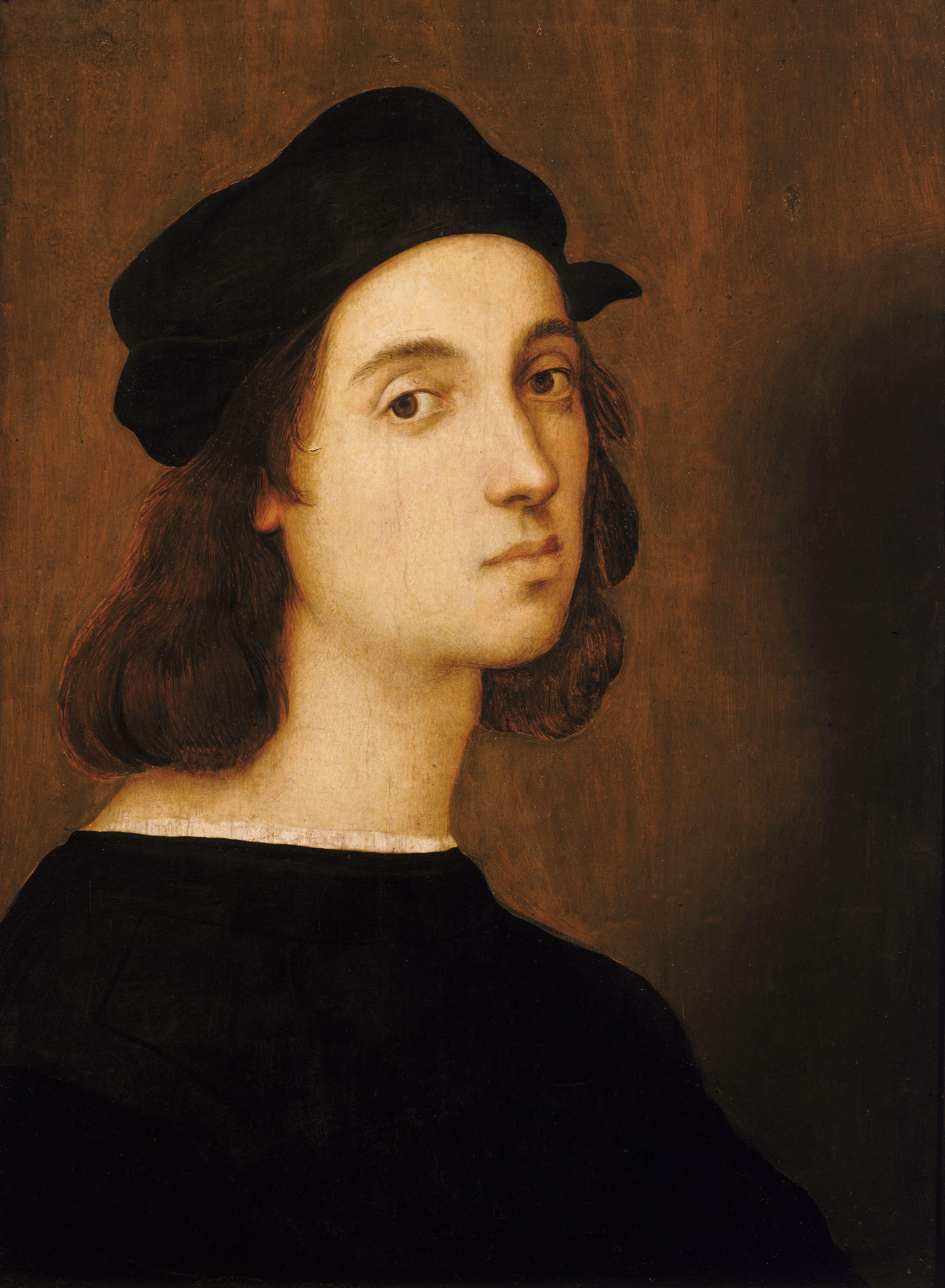
 Raphael Santi
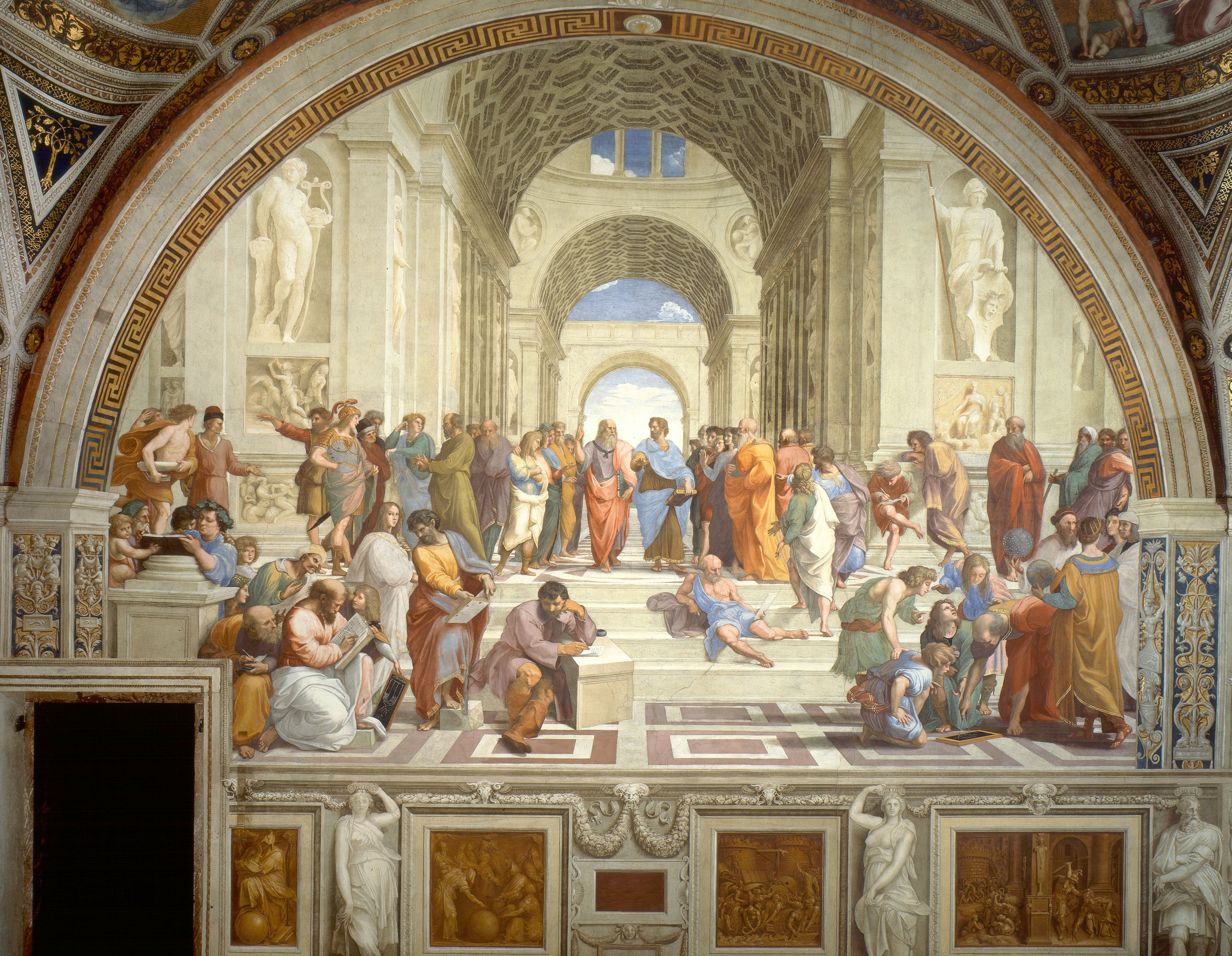
Raphael Santi, one of the most famous artists of the Italian Renaissance, was [probably] born on this day in 1483. He also [for sure] died on the same day, in 1520. Today, we share one of his most famous frescoes, The School of Athens, which was a part of a commission from Pope Julius II for the Stanze di Raffaello in the Apostolic Palace in Vatican City.
Scholars have long debated the precise identities and meanings within the work, as Raphael left no explicit explanations. The fresco presents an idealized gathering of ancient philosophers, mathematicians, and scientists in a grand architectural setting. At its center stand Plato and Aristotle, symbolizing the foundations of Western philosophy. Surrounding them are figures traditionally identified as Socrates, Pythagoras, Euclid, Archimedes, Averroes, and others, though many identifications remain uncertain. Raphael is believed to have modeled Plato on Leonardo da Vinci and Heraclitus on Michelangelo, and to have included a self-portrait among the figures.
The painting is celebrated for its perfect use of linear perspective, harmonious composition, and balanced spatial depth. Through these techniques, Raphael creates an expansive, unified space that draws viewers into an intellectual dialogue unfolding across the scene.
A classic piece of the High Renaissance!
P.S. Speaking of the Renaissance, don't forget to check out our Italian Renaissance 50 Postcards Set! :)
P.P.S. Today's artist was described by his contemporaries and later art historians through various nicknames, including il divino (the divine one). Meet the iconic Raphael—Renaissance Prince of Painters!