
 Kawanabe Kyōsai
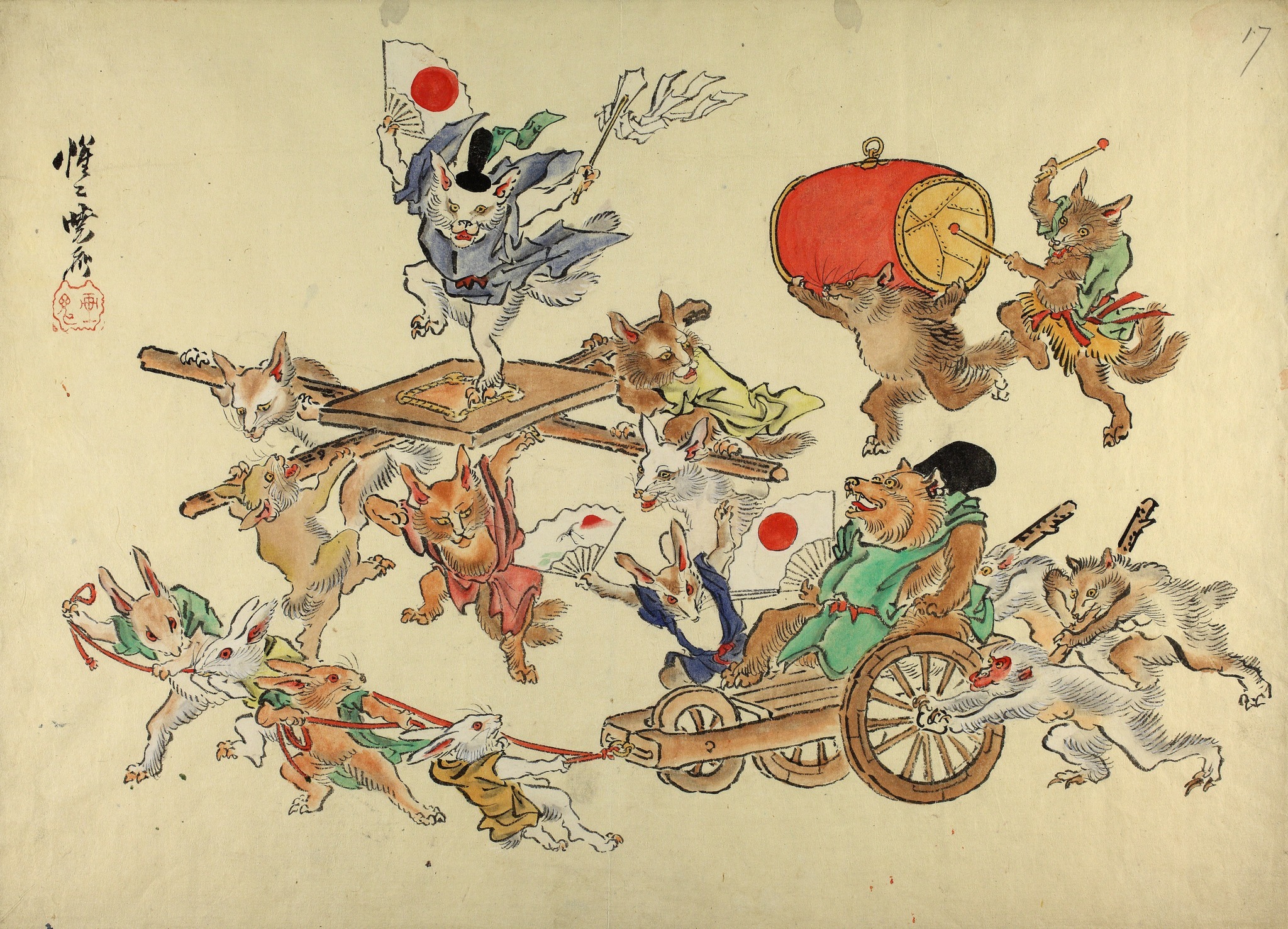
These lively creatures come from the imagination of Kawanabe Kyōsai, an artist celebrated for his irreverent humor. Kyōsai was famous for creating sekiga—spontaneous drawings made during lively calligraphy gatherings known as shogakai, where artists drank sake, wrote poetry, and improvised paintings for the crowd.
One particularly boisterous evening reportedly led to Kyōsai’s arrest. After a sake-filled shogakai, authorities accused him of producing an image that insulted the government. Exactly what he drew remains unknown—Kyōsai himself was apparently too drunk to remember.
Behind their playful appearance, works like these hint at the tensions Japan was experiencing in the late 19th century. After more than two centuries of relative isolation, the country was suddenly confronting the arrival of foreign powers, new technologies, and unfamiliar customs—everything from cannons and treaties to Western fashions like the top hat.
Kyōsai’s mischievous animals allowed him to comment on these changes with wit and imagination. Their humor masked a sharp satirical edge, offering social critique while maintaining a convenient layer of plausible deniability.
P.S. Bring these playful Japanese animal motifs into your collection with our Animals in Japanese Art 50 Postcards Set;you’ll also find in there another masterpiece by Kyōsai featuring our beloved cats and mice! :)
P.P.S. Discover bizarre Japanese postcards by Miyatake Gaikotsu!