
 Rembrandt van Rijn
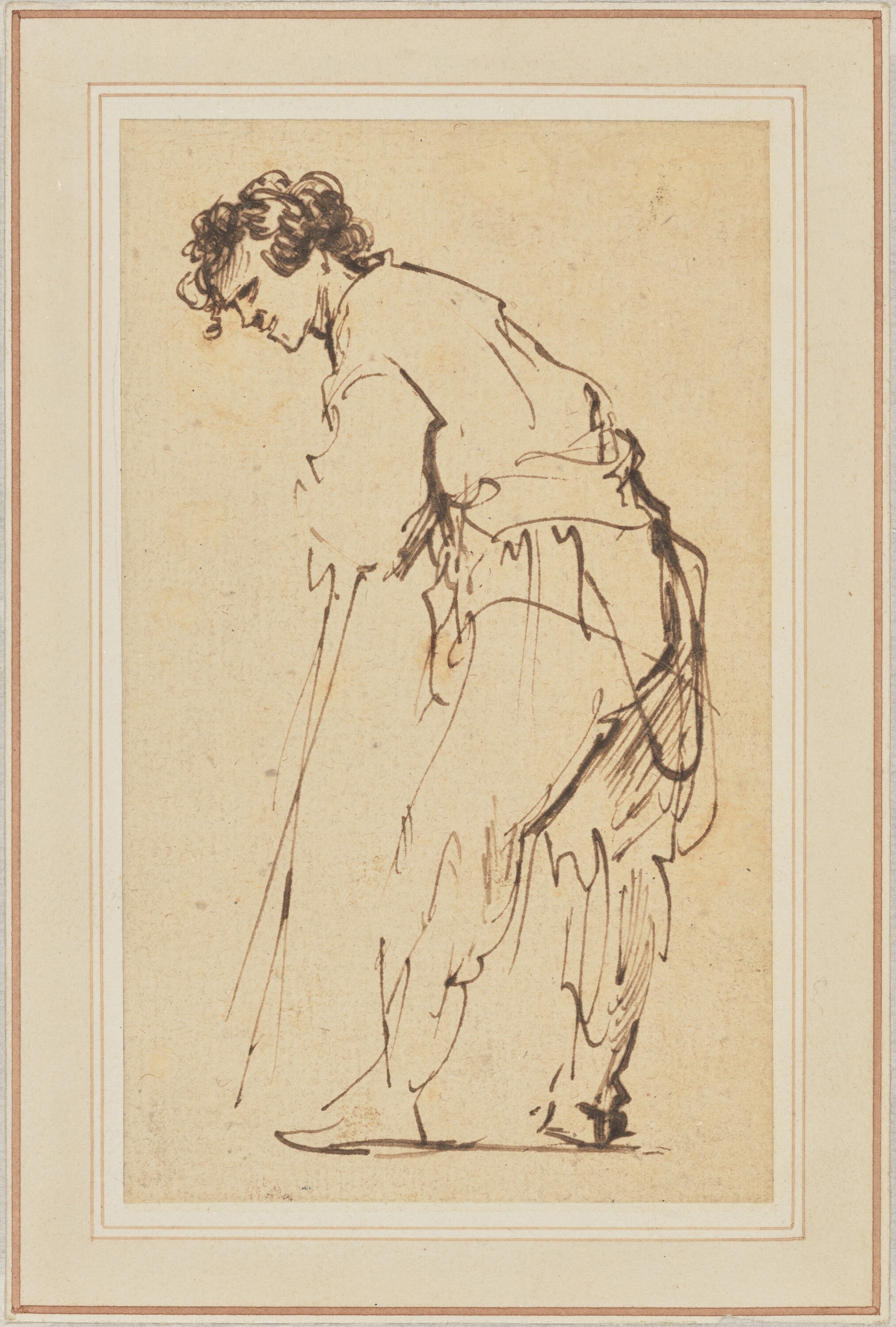
Standing in profile and facing left, a male figure leans heavily on a stick, almost certainly depicting a beggar supported by a crutch. The drawing is animated by loose, broken lines that leave areas of the paper exposed while creating subtle contrasts and darker accents. The man's stooped posture and reliance on the crutch convey physical hardship, while his unusual open-mouthed expression, resembling a laugh, introduces an unsettling note that may suggest mental instability.
It's Rembrandt van Rijn's drawing. It reflects his enduring fascination with the dignity and vulnerability of ordinary people. Between 1625 and 1631, while working from his parents’ home in Leiden and striving to establish himself as a history painter, Rembrandt produced numerous drawings as studies for paintings and etchings. Inspired by figures he encountered in everyday life, he made beggars and vagabonds recurring subjects in his work. He often incorporated them into Biblical scenes as onlookers, serving as reminders of the Christian obligation to give alms.
P.S. Discover 10 Rembrandt etchings—a lesser known part of his oeuvre!