
 James Abbott McNeill Whistler
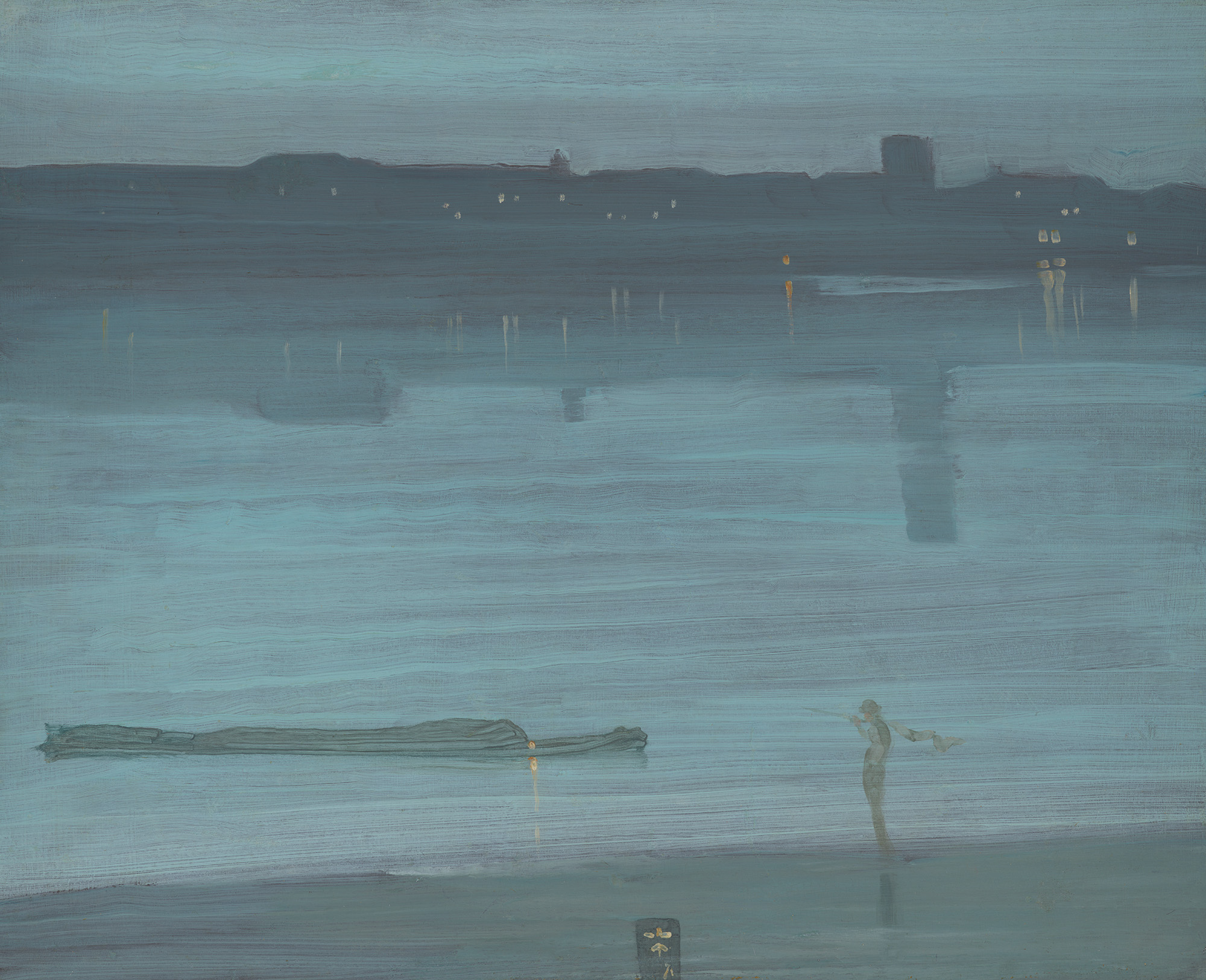
In August 1871, James Abbott McNeill Whistler, an American painter based primarily in the United Kingdom, painted Nocturne: Blue and Silver - Chelsea, the first of what was to become a series of 52 nocturne paintings (works that depicted landscapes as they appeared in twilight or in the absence of direct light).
For his first, Whistler selected a hardwood mahogany panel already covered with a preparatory layer of white paint, making it smoother still by applying his own dark layer. Panel was a practical first choice for a nocturne; the smoothness, lack of weave, and rigid non-absorbent wood provided a flawlessly even painting surface for his paint to flow onto in thin layers. (Whistler would go on to refer to these thin layers of luminous paint he used as "sauces.") Panel also allowed the artist to make adjustments by vigorously rubbing away paint without the bounce of the canvas, seemingly ideal for the unified "enamel" surface to which Whistler often referred. Its very smoothness, however, caused the paint to dry in visible, textured sweeping brushstrokes, limiting the atmospheric diffusion and optical depth he later achieved on canvas through layering and partial removal of the paint.
Canvas became his preferred choice for most of his nocturnes because its natural texture and absorbency gave him better control over the final appearance.
You can see this marvellous painting currently in the Van Gogh Museum, in the Whistler. Dandy and Disruptor exhibition. Don't miss it while in Amsterdam!
P.S. If you are hungry for more art, check out our beautiful 2027 calendars and planner. They will fill your next year with art; we promise!
P.P.S. See more of Whistler’s poetic visions in this selection of 10 of his most fascinating works.