
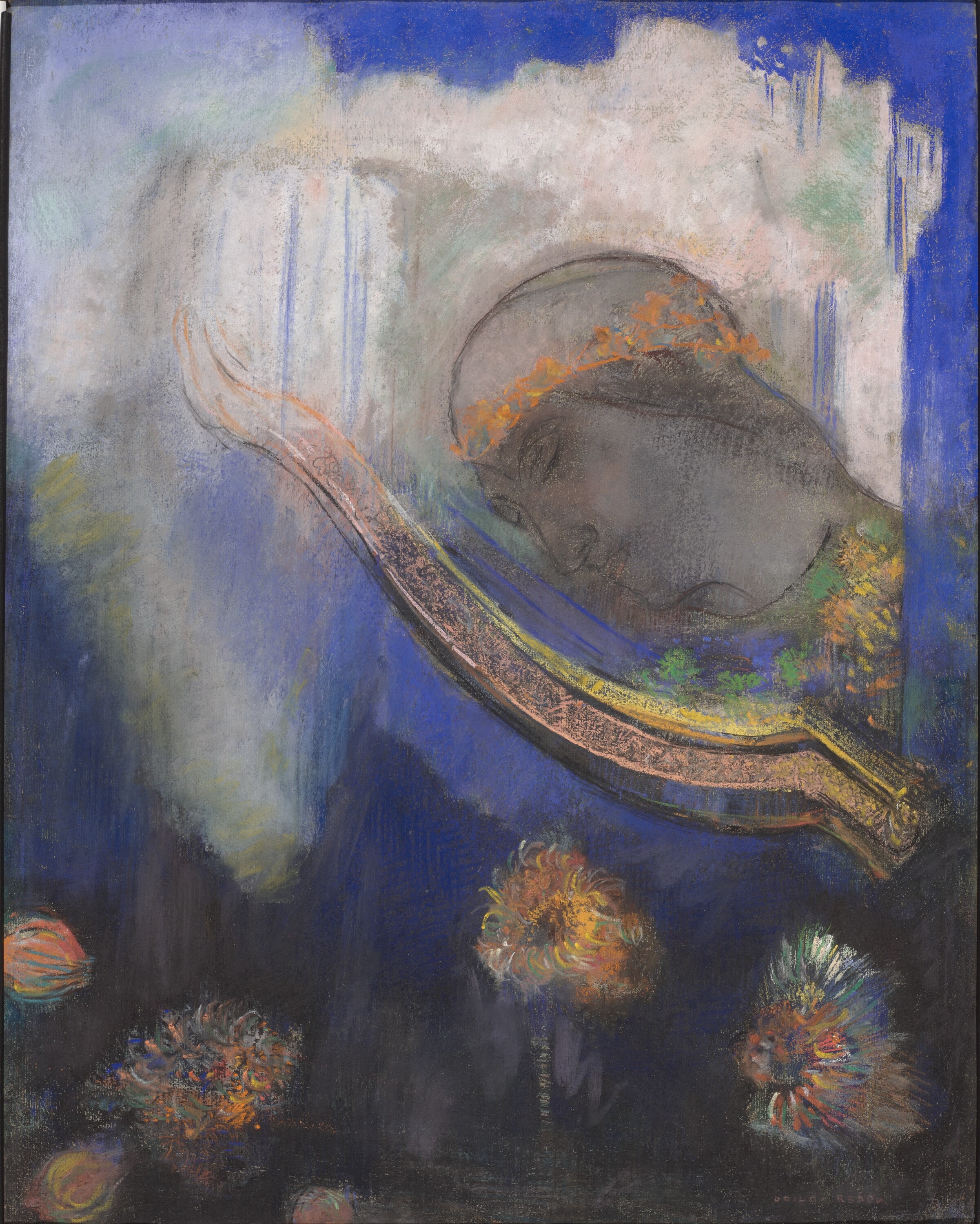
 Odilon Redon
 was a French Symbolist artist fascinated by dreams, mythology, spirituality, and the imagination's mysterious workings. In Orpheus, painted around 1905, he turned to one of Greek mythology’s most famous musicians. Orpheus possessed such extraordinary musical powers that his songs could charm animals, trees, and even stones. After his death—torn apart by the Maenads—his severed head was said to have continued singing, while his lyre was preserved among the stars. Redon transforms this violent myth into something strangely peaceful and dreamlike. Orpheus’s disembodied head appears to float above his lyre, emerging like a vision from an undefined space. Instead of constructing a recognizable landscape, Redon blends deep blues with expressive passages of yellow and orange, allowing color itself to create atmosphere and emotion. The physical world seems to dissolve around Orpheus, leaving only music, memory, and imagination. Rather than illustrating the gruesome details of the myth, Redon concentrates on its most poetic idea: although the musician can die, his art continues to live.
P.S. Let great art set the rhythm for your year. Discover our beautiful DailyArt 2027 Calendars and spend every month in the company of another masterpiece!
P.P.S. Redon was far from the only artist inspired by Orpheus. Explore the legendary musician’s story through art.